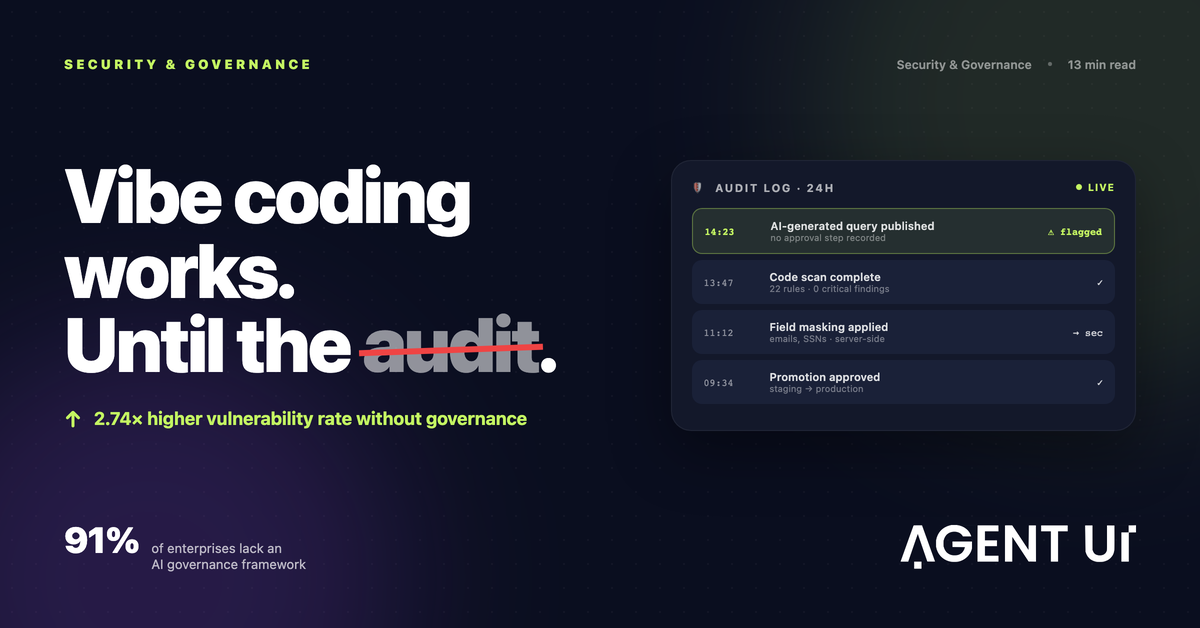
Fala vibe codingu jest prawdziwa — i luka w nadzorze też
„Chwila, kto to zatwierdził?" Nikt — bo nikt nie musiał. W lutym 2025 roku Andrej Karpathy ukuł termin „vibe coding": opisujesz w zwykłym języku, czego chcesz, a kod pisze za ciebie AI. Osiemnaście miesięcy później 87% firm z listy Fortune 500 korzysta z przynajmniej jednej platformy do vibe codingu, a zastosowanie tej metody w dużych organizacjach wzrosło o 340% między 2024 a początkiem 2026 roku.
Wzrost produktywności jest realny. Zespoły, które kiedyś czekały pół roku na miejsce w roadmapie działu IT, dziś wdrażają firmowe aplikacje w 30 minut. To, co wcześniej blokował backlog programistów, jest dziś w zasięgu każdego, kto potrafi napisać prompt.
Jest jednak problem, którego większość narzędzi do vibe codingu nigdy nie miała rozwiązywać: nadzór na poziomie dużej firmy.
Różnica między tym, co te platformy obiecują, a tym, co faktycznie dostają regulowane, duże zespoły, jest spora. A w 2026 roku — gdy w sierpniu rusza egzekwowanie unijnego AI Act, a audytorzy SOC 2 wprost pytają o nadzór nad kodem generowanym przez AI — ta różnica zaczyna kosztować.
Ile vibe coding naprawdę kosztuje firmowe zespoły
Pokusa jest oczywista. Opisujesz swój proces, AI generuje działającą aplikację i jesteś na produkcji jeszcze przed popołudniowym standupem. Żadnych ticketów w Jirze. Żadnego planowania sprintu. Żadnego czekania pół roku.
Objaw. Wszystko działa szybko, wszystko dobrze wygląda na demie i nikt nie zatrzymuje się, żeby zapytać, czego brakuje.
Przyczyna. Nie widać tego, co nie powstało razem z aplikacją: ścieżki zatwierdzania, ścieżki audytu, rozdzielenia środowisk, przeglądu bezpieczeństwa, kontroli uprawnień. Nic z tego nie wychodzi samo z prompta.
I nie jest to ryzyko hipotetyczne. Liczby za 2026 rok są bezlitosne:
- Kod pisany z pomocą AI ma 2,74 raza wyższy wskaźnik podatności niż kod pisany przez człowieka, jeśli trafia na produkcję bez mechanizmów nadzoru.
- Prawie połowa fragmentów kodu generowanych przez czołowe modele LLM zawiera błędy bezpieczeństwa.
- Podatności XSS pojawiają się w 86% próbek kodu wygenerowanego przez AI przebadanych w pięciu wiodących modelach.
- Liczba CVE formalnie przypisanych kodowi wygenerowanemu przez AI wzrosła z 6 w styczniu 2026 do 35 w marcu 2026 — o 483% w ciągu jednego kwartału.
- Commity tworzone z pomocą AI ujawniają dane uwierzytelniające w 3,2% przypadków — ponad dwa razy częściej niż commity ludzi (1,5%).
- 91% firm nie ma żadnych ram nadzoru nad AI, mimo błyskawicznego wdrażania tej technologii.
To ostatnia liczba powinna spędzać sen z powiek osobom odpowiedzialnym za compliance.
5 luk w nadzorze, które tworzy vibe coding
1. Brak ścieżki audytu
Kiedy programista zmienia kod na produkcji, zostaje po tym historia commitów, przegląd kodu, pull request, log wdrożenia. Kiedy osoba nietechniczna generuje aplikację narzędziem do vibe codingu, co zostaje? Historia czatu — jeśli masz szczęście.
Firmowe standardy zgodności — SOC 2, ISO 27001, HIPAA, PCI DSS — wymagają udokumentowanych zapisów: kto co zmienił, kiedy i dlaczego. „Poprosiłem AI, żeby to zaktualizowało" nie jest akceptowalnym wpisem w rejestrze audytowym.
Luka w audycie to nie tylko problem zgodności. To problem operacyjny. Kiedy coś się zepsuje — a zepsuje się — musisz dokładnie wiedzieć, co się zmieniło.
2. Brak rozdzielenia środowisk
Produkcja jest święta. Nie programujesz na niej, nie testujesz na niej i na pewno nie pozwalasz osobom nietechnicznym generować kodu bezpośrednio na niej.
Większość platform do vibe codingu daje ci jedno środowisko. Prototyp i system produkcyjny dzielą ten sam stan. Jeden nietrafiony prompt „w ramach testów" potrafi położyć produkcję. Nie ma bufora w postaci stagingu, nie ma bramki zatwierdzania, nie ma planu wycofania zmian.
3. Brak przeglądu bezpieczeństwa kodu
Programista wie, że zapytania SQL trzeba parametryzować. Wie, że XSS potrafi się schować w danych wyświetlanych użytkownikowi. Wie, że dane uwierzytelniające nie mogą latami leżeć nierotowane w zmiennych środowiskowych. Modele AI same z siebie nie stosują takiej ostrożności — generują kod, który działa, a „działa" to nie to samo co „jest bezpieczny".
Bez automatycznego skanowania, które trzyma kod wygenerowany przez AI przy tych samych standardach bezpieczeństwa co kod pisany przez ludzi, każda nowa aplikacja to potencjalna powierzchnia ataku.
4. Brak kontroli dostępu opartej na rolach na poziomie danych
Uprawnienia, które istnieją wyłącznie w interfejsie, to teatr. Jeśli warstwa danych nie kontroluje, kto co widzi, zdeterminowany użytkownik obejdzie interfejs bez trudu. Maskowanie na poziomie pola — gdzie adresy e-mail, numery dokumentów i dane finansowe są maskowane po stronie serwera, a nie tylko ukrywane w interfejsie — wymaga świadomego projektowania. To nie wychodzi z prompta.
5. Brak ścieżki zatwierdzania wdrożeń
W nadzorowanym procesie inżynierskim zmiany przechodzą przez przegląd, zanim dotrą do użytkowników. Ktoś — czasem kilka osób — składa podpis. Przy czystym vibe codingu osoba, która wpadła na pomysł, jest tą samą osobą, która wypuściła go na produkcję. To nie jest proces. To pojedynczy punkt awarii.
Bomba zegarowa zgodności
W 2026 roku zbiegają się trzy terminy, które zmieniają tę lukę w nadzorze z teoretycznej w pilną.
Egzekwowanie unijnego AI Act rusza 2 sierpnia 2026 roku. Systemy AI wysokiego ryzyka muszą mieć dokumentację techniczną, mechanizmy nadzoru człowieka i minimum sześć miesięcy logów zdarzeń zgodnie z artykułem 12. Jeśli twoje firmowe aplikacje zbudowane przez AI obsługują decyzje kadrowe, wyliczenia finansowe albo dane klientów, jest realna szansa, że podlegasz tym przepisom.
Audytorzy SOC 2 już pytają o nadzór nad AI. To, co kiedyś było pytaniem na przyszłość — „jak zarządzacie ryzykiem związanym z AI?" — jest dziś standardowym punktem audytu. Organizacje, które wdrożyły aplikacje generowane przez AI bez odpowiednich mechanizmów kontroli, próbują teraz odtworzyć dokumentację, która nigdy nie powstała.
72% spółek z indeksu S&P 500 ujawniło w raportach rocznych za 2025 rok co najmniej jedno istotne ryzyko związane z AI — ale tylko 26% ma kompleksowe polityki nadzoru nad AI. Właśnie ta różnica między tym, co się ujawnia, a tym, co się faktycznie kontroluje, jest dziś pod lupą regulatorów.
Narzędzia do vibe codingu, które tak szybko dowiozły twoje zespoły do celu, nigdy nie były projektowane z myślą o tych datach.
Jak wygląda nadzorowane budowanie aplikacji z AI
Nadzór nie oznacza wolniej. Oznacza, że mechanizmy kontroli są wbudowane, a nie doklejone później. Oto co AgentUI robi w każdym projekcie, w każdym płatnym planie:
Pełne logi audytowe. Każde wygenerowanie, edycja, wdrożenie i dostęp do danych zapisane z informacją o osobie, czasie i adresie IP — z eksportem do Splunka, Datadoga lub S3, bez dopłat.
Automatyczne skanowanie kodu. Dwadzieścia dwie reguły bezpieczeństwa w pięciu kategoriach, oparte na Semgrep. Krytyczne znaleziska blokują wdrożenie. Ocena bezpieczeństwa dla każdego projektu (0–100, skala A–F) zbierana w firmowym dashboardzie.
Rozdzielenie środowisk. Osobne środowiska dev, staging i produkcja, krok zatwierdzania przy promowaniu zmian, produkcja domyślnie zablokowana i natychmiastowe wycofanie zmian.
Maskowanie danych po stronie serwera. Adresy e-mail, numery telefonów i numery dokumentów maskowane w warstwie danych, a nie w interfejsie, z odmaskowywaniem zależnym od roli i logowaniem każdego dostępu.
Zgodność w standardzie. SOC 2 Type II, gotowość na RODO, wsparcie HIPAA z możliwością podpisania BAA oraz regionalne przechowywanie danych w USA, UE, Wielkiej Brytanii i Australii.
Prawdziwą alternatywą dla vibe codingu nie jest „żadnego AI"
Część organizacji, sparzonych na incydentach z aplikacjami generowanymi przez AI, zablokowała narzędzia AI w całości. To zły wniosek.
Przewaga w tempie jest realna. Wzrost produktywności jest realny. Zespoły, które kiedyś czekały miesiącami na wolne ręce w IT, dziś wypuszczają działające aplikacje firmowe w jedno popołudnie. Nie musisz rezygnować z tych korzyści, żeby mieć kontrolę — wybierasz platformę, która daje jedno i drugie.
Właściwe porównanie to nie „vibe coding kontra klasyczne programowanie". To „AI bez nadzoru kontra AI pod nadzorem".
AI bez nadzoru: szybkie wdrożenie, kosztowne tłumaczenie się audytorom, katastrofa, gdy coś pójdzie nie tak.
AI pod nadzorem: wdrożenie równie szybkie — budowaniem nadal zajmuje się AI — a każdą decyzję wytłumaczysz zespołowi bezpieczeństwa, osobie od compliance i swojemu CISO, bez sklejania raportu w noc przed audytem.
Rachunek jest prosty. Koszt wpadki w nadzorze — kara regulatora, wyciek danych, uwaga w raporcie z audytu, utraceni klienci — jest wielokrotnie wyższy niż koszt platformy, która miała te mechanizmy od pierwszego dnia. Pytanie nie brzmi, czy stać cię na nadzór. Brzmi: czy stać cię na działanie bez niego.
Co zrobić już teraz
Jeśli twój zespół używa na produkcji narzędzi do vibe codingu bez mechanizmów nadzoru, oto praktyczny punkt wyjścia:
- Zrób inwentaryzację aplikacji zbudowanych przez AI. Sprawdź, co istnieje, kto to zbudował i jakich danych dotyka.
- Oceń pokrycie audytowe. Dla każdej aplikacji: jeśli coś się zepsuje albo zapyta regulator, odtworzysz, co i kiedy się zmieniło?
- Sprawdź rozdzielenie środowisk. Czy istnieje realna granica między środowiskiem testowym a produkcją? Czy przed wypuszczeniem kodu jest krok przeglądu?
- Zmapuj ekspozycję danych. Które aplikacje dotykają danych osobowych, finansowych lub regulowanych? Czy te pola są maskowane po stronie serwera?
- Zweryfikuj pokrycie skanowaniem kodu. Czy kod wygenerowany przez AI jest sprawdzany pod kątem podatności przed wdrożeniem, czy wierzysz modelowi na słowo?
Jeśli na większość z tych pytań nie odpowiadasz „tak", różnica między tym, jak mocno korzystasz z vibe codingu, a stanem twojego nadzoru jest ryzykiem, które nosisz już teraz — a data egzekwowania unijnego AI Act, sierpień 2026, nie jest elastyczna.
Najczęściej zadawane pytania
Czym jest vibe coding?
Vibe coding to tworzenie oprogramowania przez opisanie w zwykłym języku, czego chcesz, i pozwolenie modelom AI, żeby zamieniły ten opis w działający kod, konfigurację i logikę aplikacji. Termin ukuł Andrej Karpathy w lutym 2025 roku. Zastosowanie tej metody w dużych firmach wzrosło o 340% między 2024 a początkiem 2026 roku.
Czy budowanie aplikacji z pomocą AI tworzy ryzyko bezpieczeństwa?
Tak, i to w istotnej skali. Kod generowany przez AI ma 2,74 raza wyższy wskaźnik podatności niż kod pisany przez człowieka, jeśli trafia na produkcję bez mechanizmów nadzoru, a podatności XSS pojawiają się w 86% próbek kodu wygenerowanego przez AI przebadanych w wiodących modelach. Tym ryzykiem da się zarządzać przy odpowiednim skanowaniu kodu i przeglądzie bezpieczeństwa — ale to skanowanie musi istnieć przed wdrożeniem, a nie po nim.
Co nadzór korporacyjny oznacza dla platform do budowania aplikacji z AI?
Minimum to: logi audytowe (kto co zrobił i kiedy), rozdzielenie środowisk (dev, staging, produkcja), automatyczne skanowanie bezpieczeństwa kodu, kontrola dostępu oparta na rolach egzekwowana w warstwie danych oraz udokumentowany proces zatwierdzania wdrożeń. Tych mechanizmów szukają audytorzy przy SOC 2, HIPAA, ISO 27001 i — od sierpnia 2026 — przy ocenach zgodności z unijnym AI Act.
Czy AgentUI jest zgodny z SOC 2?
Tak. AgentUI ma zgodność SOC 2 Type II i jest gotowy na RODO, ze wsparciem HIPAA i dostępną umową BAA. Regionalne przechowywanie danych obejmuje USA, UE, Wielką Brytanię i Australię. Szyfrowanie AES-256 w spoczynku, TLS 1.3 w transmisji oraz izolacja mocy obliczeniowej, magazynu i sieci dla każdego klienta z osobna.
Jak szybko zbuduję coś w AgentUI?
Pierwsza działająca wersja firmowej aplikacji powstaje zwykle w jakieś 30 minut. Wersja gotowa na produkcję to mniej więcej tydzień. Ten czas obejmuje już mechanizmy nadzoru — logi audytowe, rozdzielenie środowisk, skanowanie bezpieczeństwa — wbudowane domyślnie, bez dodatkowej konfiguracji.
Czy mogę zastąpić swoje narzędzia do vibe codingu AgentUI?
AgentUI jest pomyślany jako pełne zastąpienie nienadzorowanego budowania aplikacji z AI w dużych organizacjach. Dostajesz tę samą przewagę w tempie, a mechanizmy nadzoru są w każdym planie — od 49,99 $/mies. w planie Builder dla dwóch osób, a dla zespołów od 99,99 $/mies. za 10 osób.
Zacznij budować oprogramowanie dla swojej firmy tak, jak należy. Bez karty kredytowej.
Wypróbuj AgentUI za darmo — buduj z AI, z nadzorem na poziomie firmy.