السؤال الذي تطرحه معظم الشركات بالمقلوب
قضيت ما يقارب عشر سنوات في الجهة الصعبة من هذا السؤال.
طوال سبع سنوات في شركتي السابقة، كان بناء البرامج التي تدير العمل داخل الشركة هو عملي. لا مشروعاً جانبياً ولا مبادرة ربع سنوية، بل ما أفعله كل يوم، ومعه الجزء الأصعب والأهدأ: أن تجعل الناس يستخدمون فعلاً ما بنيته. اليوم أنا الرئيس التنفيذي لـ AgentUI، وأساعد شركات أخرى على اتخاذ هذا القرار بالذات. لذلك حين يسألني أحدهم: نبني أم نشتري؟ لا أستعين بإطار عمل قرأته في مكان ما. أستعين بالندوب.
النسخة المختصرة مما تعلمته: معظم الشركات تطرح السؤال بالمقلوب. تبدأ بـ«هل يمكننا شراء حل لهذا؟» بينما السؤال الأفضل للبداية هو «هل هذه الطريقة في العمل خاصة بنا وحدنا؟». السؤالان ليسا واحداً، والخلط بينهما يكلف سنوات.
دعني أشرح.
القاعدة التي يطبّقها الجميع خطأً
الحكمة السائدة تبدو معقولة على الورق: جرّب البرنامج الجاهز أولاً، ولا تبنِ إلا إذا لم يناسبك شيء. كنا نتبع تلك القاعدة حرفياً. كنا نحاول الشراء دائماً قبل البناء.
المشكلة في ما كانت تعنيه «المحاولة» على أرض الواقع. في جزء حسّاس من عملياتنا أمضينا سنوات، لا أسابيع بل سنوات، نحاول أن نجعل برنامجاً اشتريناه يعمل. جرّبنا برنامجين مختلفين في تلك الفترة. فشل كلاهما. وفشلا في كل مرة للسبب نفسه: كانا يطلبان منا أن نكيّف عملياتنا مع البرنامج، بدل أن يتكيّف البرنامج مع عملياتنا.
تلك الجملة هي النقاش كله في صورة مصغّرة. حين تشتري برنامجاً جاهزاً لعملية خاصة بشركتك وحدها، فأنت لا تشتري حلاً. أنت تشتري مشروع ترميم لطريقة عملك بأكملها، وهذا الترميم لا ينتهي أبداً. كل التفاف، وكل «هذا الجزء سنعمله على جدول Excel جانبي»، وكل جلسة تدريب تشرح لماذا لا يفعل البرنامج الشيء البديهي: هذا هو ثمن حشر عملك داخل افتراضات شخص آخر.
ما لا يقوله لك أحد أن هذا الثمن لا يظهر في الفاتورة. البرنامج له سعر. سنوات الاحتكاك التشغيلي ليس لها سعر مكتوب.
حالة حقيقية: أداة المبيعات التي فتحت لنا العالم
دعني أجعل الأمر ملموساً، فالكلام المجرّد سهل الموافقة عليه وصعب التنفيذ.
من أكبر ما بنيته يوماً كانت أداة لمندوبي المبيعات. قبلها، كان إعداد عرض سعر واحد معاناة يدوية. على المندوب أن يجمّع حفنة من ملفات Excel، ويطارد بيانات مخزون قد تكون محدّثة وقد لا تكون، وينبش المعلومات التقنية: أوراق المواصفات، ملفات PDF، وثائق الحل المقترح، من أي مكان صادف أن تكون فيه. كان بطيئاً، كثير الأخطاء، ومعتمداً كلياً على أن يعرف ذلك المندوب بالذات أين يوجد كل شيء.
فبنينا أداة يدخل إليها المندوب، فيرى المخزون مباشرةً ويصدر عرض السعر في حينه. المكسب لم يكن السرعة وحدها. المكسب أن كل معلومة تقنية صارت في مكان واحد. تضغط على المنتج فترى كل شيء: المواصفات، الوثائق، ملفات PDF، والحل المقترح. ثم، وهذا أهم جزء، تشارك الملف كاملاً مع العميل بضغطة واحدة.
فعلت تلك الأداة شيئاً لم أتوقعه بالكامل حين بدأت ببنائها. مكّنتنا من كسب عملاء من كل أنحاء العالم لم نكن نصل إليهم من قبل. حين يستلم عميل محتمل في قارة أخرى عرض سعر كاملاً ومهنياً ومفصّلاً تقنياً خلال دقائق بدل أيام، تتوقف الجغرافيا عن أن تكون عائقاً. الأداة لم تجعلنا أسرع فحسب. وسّعت حجم السوق الذي نستطيع خدمته بمصداقية.
ما كان أي منتج جاهز ليفعل ذلك، لأن أي منتج جاهز لم يكن يفهم مخزوننا ووثائقنا التقنية وطريقتنا في البيع كما نفهمها نحن. حاولنا. أتذكر البرنامجين والسنوات الضائعة؟ هذا بالضبط ما كانا يحاولان استبداله ويفشلان فيه.
إذن، متى ينبغي أن تشتري؟
إن وصلت إلى هنا وأنت تظن أنني من دعاة «ابنِ كل شيء بنفسك»، دعني أصحّح فوراً. لست كذلك.
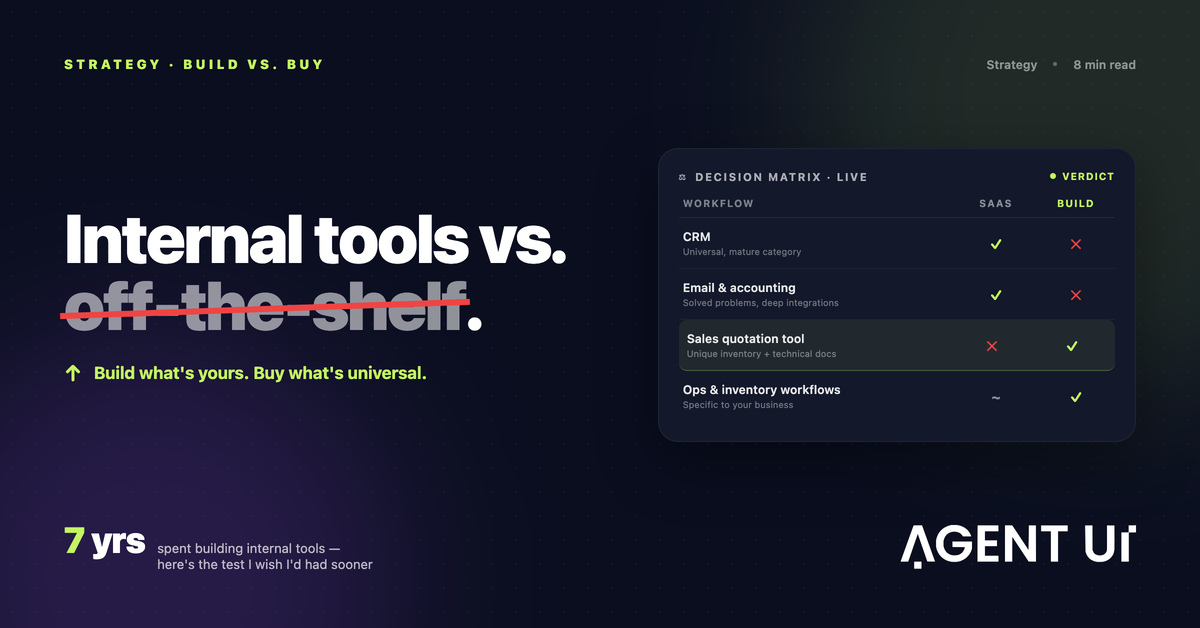
لن أبني نظام CRM أبداً. نحن نشتري الـ CRM، وانتهى الأمر، وأنصح كل الناس تقريباً بالمثل.
الفرق هنا. نظام CRM يحتاج أن يتكامل مع بريدك ومع عشرات الأدوات الأخرى. إنها فئة ناضجة ومعقّدة فعلاً، والمنتجات الموجودة متينة تحديداً لأن آلاف الشركات طرقت عليها لسنوات. لا ميزة خاصة تكسبها ببناء نسختك. ستبذل جهداً هائلاً لتصل، في أحسن الأحوال، إلى شيء أسوأ قليلاً مما كان يمكنك شراؤه في اليوم الأول.
هذا هو الاختبار، وهو أبسط من معظم أطر «نبني أم نشتري»:
- اشترِ حين تكون المشكلة عامة. إذا كانت مئة شركة أخرى لديها الحاجة نفسها، فقد بنى أحدهم نسخة أفضل مما ستبنيه، وربطها بكل شيء. إدارة العملاء، البريد، المحاسبة، الرواتب: كلها محلولة. لا تعد اختراعها.
- ابنِ حين تكون العملية خاصة بك وحدك. حين يكون لديك سير عمل يخص طريقة تشغيل شركتك أنت، مثل طريقتنا في إعداد عروض الأسعار التقنية، فهذه هي اللحظة التي يصبح فيها البناء منطقياً. لا يوجد منتج يناسبها، لأن العملية لا توجد إلا داخل جدرانك.
السؤال الحاسم ليس أبداً «هل يوجد برنامج لهذا؟». بل «هل ما نفعله هنا مختلف بما يكفي كي لا يستوعبه أي برنامج عام؟». إن كان الجواب نعم، ابنِ. وإن كان لا، اشترِ وامضِ في حياتك.
ما الذي غيّره الذكاء الاصطناعي فعلاً
طوال معظم حياتي المهنية، كانت شجرة القرار هذه تأتي بحاشية قاسية: حتى حين يكون البناء هو الخيار الصحيح بوضوح، كان مكلفاً. تحتاج مبرمجين. تحتاج وقتاً. كان البناء صحيحاً نظرياً وغير محتمل عملياً في كثير من الأحيان، ولهذا لجأت شركات كثيرة إلى شراء أدوات لا تناسبها، ثم قضت سنوات تعاني منها، كما فعلنا نحن.
محا الذكاء الاصطناعي تلك الحاشية، وهذا هو الجزء الذي يحمّسني حقاً.
العالم القديم كان يجبرك على تكييف عملياتك كلها مع البرنامج. العالم الجديد يتيح لك أن تبني برنامجاً يتكيّف مع عملك. هذا الانقلاب هو اللعبة كلها. كل شركة مختلفة، ولأول مرة يمكنك أن تحصل على نظام يرقمن عملياتك والطريقة المحددة التي تدير بها شركتك، دون جيش من المهندسين.
هذا بالضبط ما نبنيه في AgentUI. الفكرة أن تبني بالذكاء الاصطناعي أي برنامج داخلي تحتاجه، بدل توظيف مبرمج وانتظار شهور. ولأكون واضحاً: المبرمجون ما زال لديهم عمل كثير. سأستعين بمبرمج لمنتج يتعامل معه العملاء دون تردد، فما يلمسه عملاؤك يستحق هذا القدر من الإتقان. لكن للبرامج الداخلية؟ في معظم الحالات لم تعد تحتاج إليه. تحتاج ذكاءً اصطناعياً وأداة تتيح لك البناء.
هذا يحرّك حساب «نبني أم نشتري» بطريقة يسهل الاستهانة بها. حين كان البناء مكلفاً، كان «اشترِ ثم اثنِ عملياتك» خياراً عقلانياً غالباً حتى لو آلم. أما الآن وقد صار البناء رخيصاً وسريعاً، فالكفة تميل بقوة نحو بناء كل ما هو خاص بك فعلاً.
الاعتراضان الأكثر تكراراً
كلما طرحت هذا الكلام، يظهر قلقان تقريباً في كل مرة. وهما مشروعان ويستحقان إجابات مباشرة.
«وماذا عن الأمان؟»
هذا هو الأكبر. الشركات تقلق من تسرّب المعلومات، ومن وصول الأشخاص الخطأ إلى البيانات، ومن الاختراق أو فقدان المعلومات. خوف مشروع: تاريخياً كان بناء أدواتك يعني تحمّل أوجاع الأمان بنفسك. هذا ما نعالجه مباشرة في AgentUI ببنية تحتية مُدارة، كي يكون كل ما تبنيه آمناً منذ البداية. لا ينبغي أن تصبح خبير أمن معلومات لتبني برنامجاً داخلياً، ولا أن تختار بين «يناسب عملنا» و«لن يعرّضنا للاختراق».
«ألن نبقى عالقين في صيانته إلى الأبد؟»
هذا خوف الصيانة والدين التقني، وهو الذي يقتل بصمت كثيراً من قرارات البناء الجيدة. الافتراض أن البناء يعني توقيع عقد صيانة أبدي. لكن ما يغيب عن الناس: تأتي لحظة تستطيع فيها ببساطة أن تتوقف عن البناء. الأداة تؤدي عملها، وأنت تمضي. أما الجزء الصعب فعلاً، أي صيانة البنية التحتية تحتها وهو ما يولّد الرهبة حقاً، فهو بالذات ما نتولاه نحن في الخلف، فلا تبقى تراقب كل قطعة. ابنِ، وأنهِ، وامضِ.
الرأي غير الشائع: توقّف عن محاولة بناء الكاتدرائية
هنا أزرع رايتي، وهذا ما أظن أن معظم الناس يخطئون فيه حتى بعد أن يقرروا البناء.
لا تحاول بناء نظام ضخم من الصفر. إنها فكرة سيئة، في أغلب الحالات.
الغريزة، ما إن تتحمس شركة لصناعة برنامجها الخاص، أن تذهب إلى الضخم: أن تصمّم منصة داخلية شاملة تدير العمل كله. هكذا تموت مشاريع البناء. تنهار تحت طموحها قبل أن تقدّم أي قيمة.
الحركة الأفضل بكثير أن ترقمن العمليات التي تنفذها يدوياً أصلاً: تلك التي تعيش اليوم في Excel، وتلك الخاصة بشركتك وحدها. هذا كل شيء. ابحث عن جدول البيانات الذي يكرهه فريقك، والتجميع اليدوي الذي يبتلع ساعات كل أسبوع، والشيء الذي لا تفعله إلا شركتك وبطريقتها وحدها. ابنِ ذلك. صغير، وملموس، وعائده واضح، وهو تحديداً النوع الذي لن تجيده أي أداة جاهزة.
ابدأ من جدول البيانات المؤلم، لا من الرؤية الكبرى. الكاتدرائية تستطيع الانتظار. أداة عروض الأسعار التي فتحت لنا العالم لم تبدأ مشروعاً عملاقاً، بل بدأت بجملة «هذه العملية اليدوية تقتلنا، لنصلحها».
الخلاصة
اشترِ ما هو عام. ابنِ ما هو ملكك حقاً. لا تثنِ عملياتك لتناسب برنامجاً لم يُصمَّم لك أصلاً؛ ارتكبنا ذلك الخطأ سنوات، ووصلت الفاتورة على هيئة وقت ضائع وفرص ضائعة. ومهما بنيت، ابدأ صغيراً، ابدأ من العملية اليدوية التي تفهمها أصلاً، ودع الأداة تكبر من هناك.
طوال معظم حياتي المهنية، كانت هذه النصيحة تأتي بتحفظ واحد: البناء ترف. لم يعد كذلك. ما كان يتطلب مبرمجين وأرباع سنة من العمل صار اليوم في متناول من يفهم العملية فعلاً، أي أنت.
هذه هي النقلة الحقيقية. لم يكن السؤال يوماً «نبني أم نشتري» فقط. كان: هل تستطيع تحمّل كلفة برنامج يناسب طريقتك الفعلية في العمل؟ الآن تستطيع.